

Buying a foreclosed property can sometimes present an opportunity to purchase a home at an attractive price. But foreclosure is not the same as a normal real estate transaction.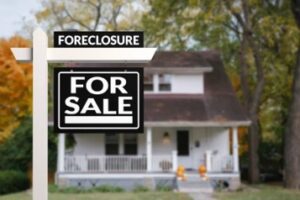
Court approval, competing offers, ‘as-is, where-is’ conditions, financing requirements and uncertain timelines can all add additional risk.
Before jumping at what appears to be a great deal, it’s important to understand how the process works and what you’re getting into.
How Does Foreclosure Work in BC?
When a borrower defaults on their mortgage, the lender may begin foreclosure proceedings through the Supreme Court of British Columbia.
An important stage in the process is the Order Nisi, which establishes the amount owing and generally provides the borrower with a period of time to ‘redeem’ the mortgage.
When a redemption period is granted, BC legislation provides for a six-month redemption period unless the court determines that a shorter or longer period is appropriate.
During this period, the homeowner may be able to stop the foreclosure by paying the amounts required to redeem the mortgage.
If the situation isn’t resolved, the court can order that the property be sold and grant a party, commonly the lender, conduct of sale.
What is Conduct of Sale?
Conduct of sale gives the party named by the court, the authority to market and attempt to sell the property, subject to the terms of the court order.
This is where the process can start to look somewhat like a traditional home purchase – but there are some major differences.
A buyer may submit an offer, negotiate with the party having conduct of sale and eventually remove their conditions.
But there’s another important step: The sale still requires court approval. And that’s where things can get interesting.
1. Your Accepted Offer Doesn’t Mean You’ve Bought the House.
This is one of the biggest surprises for buyers.
You can negotiate an offer, have it accepted and remove your subjects – and still not end up with the property.
The court hearing is public and other interested purchasers may have an opportunity to submit competing offers.
Under the current BC court process, competing bids are generally submitted as sealed bids on the day of the sale hearing.
So even though you were the buyer whose original offer triggered the court application, you could suddenly find yourself competing against other purchasers.
And the highest offer isn’t necessarily guaranteed to win. The court has discretion when determining whether to approve the sale.
Bottom Line: Don’t mentally move into the house, until the court has approved your purchase.
2. You’re Usually Buying “As Is, Where Is”
With a normal purchase, the seller has firsthand knowledge of the property and may provide certain representations about it.
A foreclosure can be very different.
The lender selling the property usually hasn’t lived in the home and may know very little about its condition or history.
Court-ordered properties are commonly sold “as is, where is.”
That means buyers need to be particularly cautious about:
- Structural or foundation problems
- Water damage or mold
- Electrical and plumbing issues
- Roof condition
- Unpermitted renovations
- Appliances and fixtures
- Deferred Maintenance
- Environmental concerns
- Strata-related issues for condos and townhomes
Don’t assume that because something is present when you view the property, it will necessarily be repaired, replaced or even in the same conditions when you take possession.
3. Be Very Careful With Subject-Free Offers
This is particularly important when it comes to financing.
You may initially have subjects for financing, inspection, title review or other due diligence. However, competing offers presented at the court hearing are generally required to be condition-free.
That means you should have completed as much due diligence as possible beforehand.
And here’s the mortgage issue many buyers don’t consider:
A Mortgage Pre-Approval Is Not Final Approval.
Being pre-approved for a mortgage doesn’t necessarily mean the lender has approved this particular property.
Your lender may still need to review:
- The purchase contract
- Court-sale documentation
- The property itself
- An appraisal
- Property condition
- Strata documents, if applicable
- Your current income, credit and down payment
- The final purchase price
This becomes especially important if you increase your offer at the court hearing.
For example, imagine you’re approved to purchase a foreclosed property for $800,000 but competing bids result in you increasing your offer to $850,000.
Your lender still has to be comfortable with the higher purchase price and the property’s value.
If the appraisal comes in at only $800,000, the lender may base its financing on the lower appraised value rather than your $850,000 purchase price.
You could be responsible for making up the difference from your own funds.
That’s why your mortgage broker should know you’re considering a foreclosure before you make the offer, not after you’ve won the bid.
4. Court Timelines Don’t Follow Your Moving Schedule
In a traditional purchase, buyers and sellers negotiate a completion date that works for both parties. A court-ordered sale has another participant:
The Court.
Court availability and the legal process can affect when the sale is heard and ultimately approved.
The uncertainty can create complications if you’re:
- Selling another home
- Ending a rental tenancy
- Trying to coordinate movers
- Locking in a mortgage rate
- Depending on another property’s sale proceeds
- Planning renovations before moving in
Build some flexibility into your plans.
5. Occupancy Can Create Additional Complications
Another consideration is who is actually living in the property.
The former owner or tenants may still occupy the home.
Possession issues can therefore be more complicated than in a typical transaction.
Don’t simply assume that everyone will be gone and the house will be empty on possession day.
Your lawyer and Realtor should review the specific terms of the sale and advise you about possession and any potential occupancy issues before you commit.
6. Don’t Assume ‘Foreclosure’ Automatically Means ‘Bargain’
This is an important misconception.
A lender generally wants to recover as much of the outstanding debt and costs as reasonably possible, and the court process is designed to oversee the sale.
If several buyers believe they’re getting a bargain, competition at the court hearing can quickly push the price higher.
Ask yourself: If this wasn’t a foreclosure, would I still pay this price for this property in its current condition?
If the answer is no, don’t let the excitement of winning a court bid override the numbers.
Due Diligence Is Your Financial Lifeline
Buying a foreclosure isn’t necessarily a bad idea. Some buyers purchase court-ordered properties successfully and end up with excellent homes.
But this isn’t the type of transaction where you want to “figure things out later.”
Before removing subjects or attending the court hearing, consider assembling your team:
- An experienced Realtor who understands BC court-ordered sales and can guide you through the offer and bidding process.
- A BC Real Estate Lawyer who can review the legal documents, title, court orders and terms of sale and explain the legal implications.
- A qualified Home Inspector who can help identify potential problems before you’re committed, where access and timing permit.
- An experienced Mortgage Broker, who understands court-ordered purchases and can work on the financing before you make an unconditional commitment.
One Final Rule: Know Your Maximum Before Going to court
A court hearing can create the same emotions as an auction.
Someone else bids $5,000 more. You increase your offer. They increase theirs. Suddenly you’re $40,000 above the price you originally thought the property was worth!
Before attending court, establish three numbers:
- What is the property worth to you?
- How much can you comfortably afford?
- How much will your lender actually finance?
Your maximum offer should take all three into consideration.
The Bottom Line
A foreclosure can present an opportunity – but a lower asking price doesn’t necessarily mean lower risk.
The court approval process, competing bids, property condition, financing requirements and uncertain timelines make these purchases considerably different from traditional real estate transactions.
Do your homework. Get your financing reviewed early. Have the property inspected where possible. Understand the legal terms. And surround yourself with professionals who have experience with court-ordered sales.
The goal is not simply to win the property. It’s to make sure that after you win it, you’ve made a good investment!
If you are currently considering purchasing a foreclosure property, don’t hesitate to contact us to look at your financing options.